Housing Terms
explained
The government's language on housing can blur an important distinction, this page breaks down what public, social and community housing actually means in Victoria, and why the difference matters to our campaign.

Public Housing
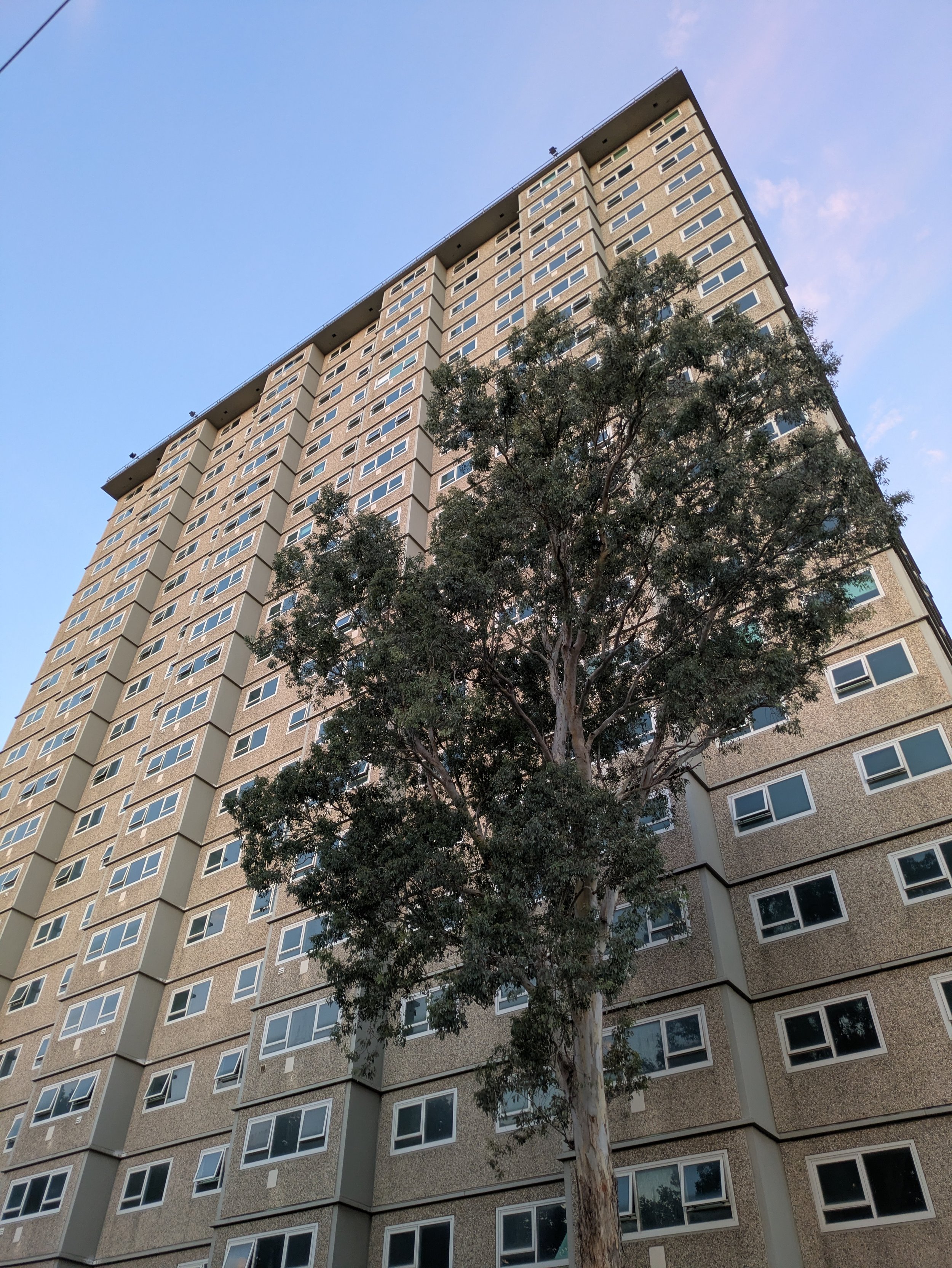
In Victoria, Australia, Public Housing is owned and managed by the Government of Victoria (Director of Housing).
The Government provides public housing to eligible disadvantaged Victorians including those unemployed, on low incomes, over 55, with a disability, with a mental illness or at risk of homelessness.
To residents of public housing, it is their home, a place that underpins their psychological wellbeing, economic security and social connection.
Public Housing plays a fundamental role in the health and wellbeing of marginalised persons, by providing shelter, safety and security. The availability of affordable, sustainable and appropriate housing enables people to participate in the social, economic and community aspects of their lives.
By 2025 an estimated one-third of the world’s city dwellers will struggle to secure decent, affordable housing. Australia is currently in the midst of a housing crisis, and in Melbourne, key public housing estates are being sold off to the private sector under the Government’s ‘real estate model’ of renewal.
The waitlist for access to public housing in Victoria continues to grow – over 1200 new applicants in June 2019 alone – as the public housing stock continues to shrink. Homelessness is growing at higher and higher rates, whilst there is less housing available to relieve the pressure for those that feel it most.
The overwhelming body of housing and health research shows that the cost related to the health system, social services, and the provision of further housing, decreases significantly when a person has access to adequate, safe, affordable housing in the form of public housing. The social and personal cost of abandoning public housing residents and the system that is meant to support them has recurring and devastating effects that exacerbate socio-economic inequality and impoverish us all.

Social Housing
Social housing is an official umbrella term that includes both Public Housing (housing owned AND managed by the state) and Community Housing (owned OR managed by non-government housing organisations).
The Victorian Government changed the Housing Act in 2016 to make this explicit.
Public housing conditions for residents are regulated by the State Government. The conditions for community housing tenants vary between organisations, but are often inferior to those for public housing tenants.
For example, public housing residents pay 25% of gross income in rent, but community housing organisations charge up to 30%, and sometimes add ‘fees’ to this. They also require tenants to apply for Commonwealth Rent Assistance which is then paid to the community housing organisation.
The other change made to the Housing Act in 2016 was the establishment of the Victorian Housing Register. The register is a combined waiting list for anyone applying for public housing or community housing. There is no longer a separate public housing waiting list.
Over recent years a significant proportion of public housing accommodation has been transferred to community housing organisations. It is important, when discussing public housing or community housing, to spell out what is meant, instead of using the umbrella term ‘social housing’.
Talking about social housing conceals the shift that is occurring. Because the Victorian Government is increasing support for community housing at the cost of public housing, calling both ‘social housing’ allows this shift to go unremarked.
In a time of increasing homelessness the Victorian Government has a responsibility to grow public housing to meet the need for this critical social infrastructure. Adequate public housing is essential for the well-being of low income families and individuals.
Housing struggle has existed here since 1788
Public housing in Australia is built on the stolen, unceded lands of sovereign Indigenous nations. This fact means that the struggle for housing justice in Australia should be considered in its longer social and historical context. For as Tanganekald legal scholar Irene Watson once observed, the housing crisis for Indigenous people in Australia began in 1788.
In this way, we acknowledge that the loss of public housing is intrinsically connected with the ongoing dispossession of Indigenous peoples of their lands. When public-private partnerships are enacted to redevelop public housing land in Australia, these do not merely privatise public land but further entrench the operation of Indigenous dispossession.
All of these trends are also connected with deeper processes that cause displacement and ecological degradation both here in Australia and globally. The fight for housing is not merely a fight for shelter. To be securely housed in a place where ties of belonging can be established and sustained is fundamental to a good life. For everyone. To deny that ability is part of the logic of extractive colonial-capitalism that affects the lives of many people around the world.
We acknowledge the Wurundjeri and Boonwurrung / Bunurong peoples on whose lands we live and work in the Save Public Housing Collective. We pay our respects to Elders past, present and emerging as sovereign peoples of Country. This acknowledgement is part of our commitment to work in solidarity with struggles for Indigenous land justice.